

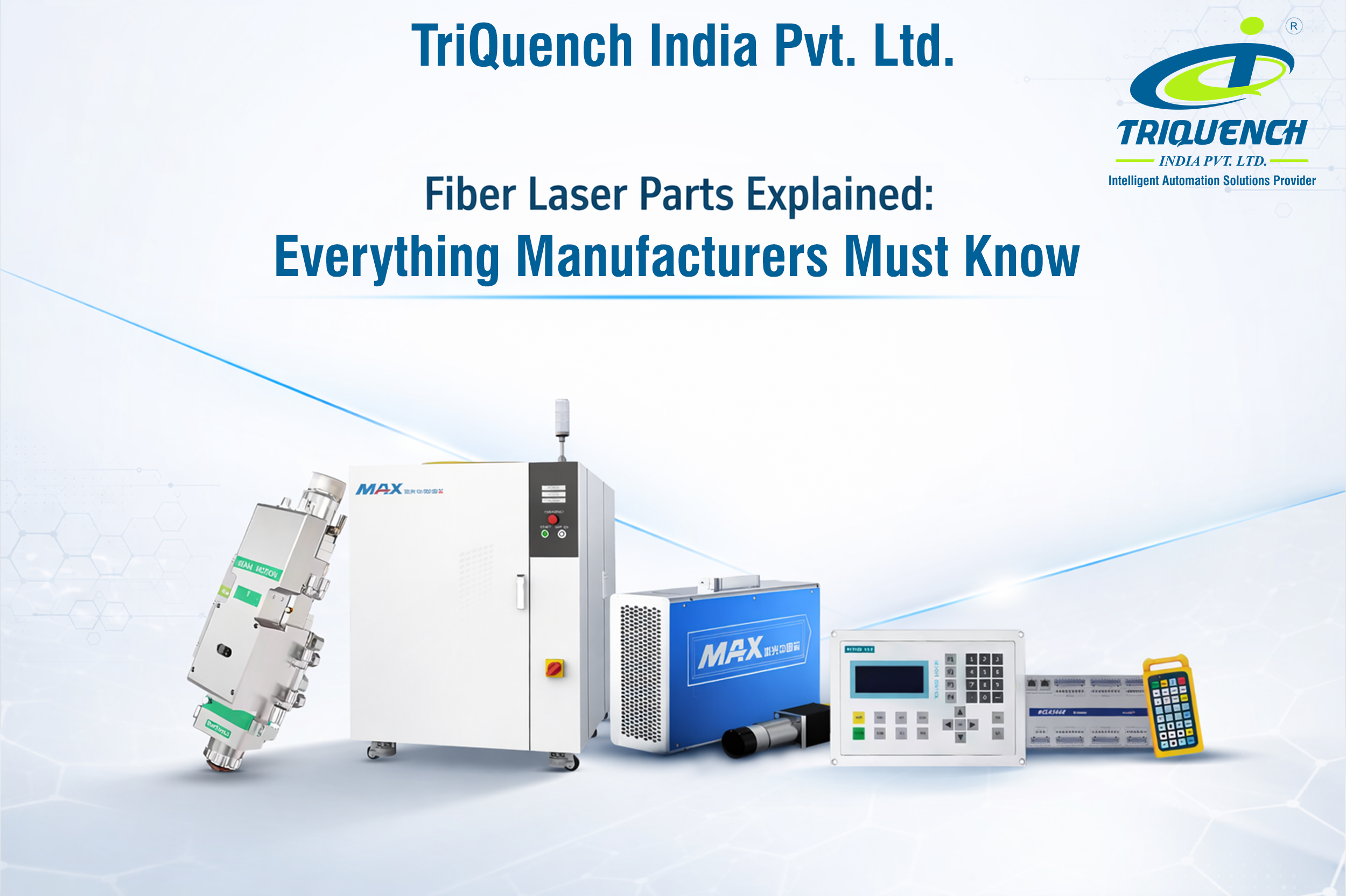
Introduction: What Are Fiber Laser Parts?
- Fiber laser machines are the backbone of modern metal fabrication, delivering unmatched speed and precision.
- Fiber laser parts are the core and supporting components that enable a machine to generate, guide, and control laser energy while ensuring stable motion and thermal balance.
- These parts collectively influence: Cutting precision, Production speed, Machine reliability, Maintenance frequency, and Total cost of ownership.
- For OEMs supplying machines globally, component selection directly impacts brand reputation and customer satisfaction.
Core Fiber Laser Parts Used in Industrial Machines
- Fiber Laser Source: The heart of the machine, responsible for generating high-intensity beams for cutting metals like stainless steel, mild steel, aluminum, and copper. Key considerations: Power stability, efficiency at various thicknesses, and long service life.
- Laser Cutting Head: Focuses and delivers the beam with extreme precision. Its role includes maintaining focus distance, ensuring consistent kerf width, and handling thermal loads.
- Servo Motors & Drives: Control the motion system (X, Y, and Z axis). They provide high positional accuracy, smooth acceleration, and repeatable cutting paths. Poor quality here leads to vibrations and uneven cuts.
- Laser Chiller System: Maintains optimal operating temperature to protect the laser source and cutting head. Reliable chillers are essential for high-power systems in global industrial conditions.
Electrical & Supporting Fiber Laser Parts
- Power Supply Units: Ensures uninterrupted performance and protects sensitive components through voltage regulation and protection from fluctuations.
- Cables & Connectors: Vital for signal integrity and power transmission. High-quality cables provide reduced electrical interference, improved safety, and longer operational life.
- Inferior cabling leads to intermittent faults that are difficult to diagnose and costly to fix.
How Fiber Laser Parts Affect Machine Performance
- Every part contributes to overall efficiency. When components work in harmony, manufacturers achieve consistent cutting accuracy, higher throughput, and reduced downtime.
- In contrast, mismatched or low-quality parts cause frequent breakdowns and customer dissatisfaction.
- Common problems include unstable cutting performance, excessive wear and tear, higher energy consumption, and shortened machine lifespan.
Key Factors for Selection and OEM Strategy
- Manufacturers should evaluate compatibility with machine architecture, availability of spares, and long-term reliability.
- Trusted suppliers help OEMs reduce development time, improve after-sales service, meet global expectations, and scale production efficiently.
- The industry is evolving with trends like higher-power compact sources, advanced cooling, and modular components for faster servicing.
FAQs – Fiber Laser Parts
- Q: What are the most important fiber laser parts? A: Fiber laser source, cutting head, servo motors, chiller system, power supply, and cables.
- Q: How do fiber laser parts affect cutting quality? A: Each part influences beam stability, motion accuracy, and thermal control, impacting cut precision.
- Q: Can fiber laser parts be customized for OEM machines? A: Yes, many components can be tailored to specific machine designs and applications.
- Q: How often should fiber laser parts be replaced? A: It depends on usage intensity, operating conditions, and preventive maintenance practices.